Thirty years ago the ‘rice riots’ were the beginning of the end of the Administration of President William Tolbert (1971 – 80). April 14, 1979 – ‘The day Monrovia stood still’, as described by the late Albert Porte, one of Liberia’s most independent and prolific writers. A people’s protest against the increase in the price of rice resulted in police firing at demonstrators, killing hundreds maybe more than one thousand Liberians whose only fault it was to no longer accept the one-party rule of the True Whig Party, the political machinery of the Americo-Liberian elite. The ‘rice riots’ announced in a very violent way the end of an era of political stability which, it should be reckognized, was only made possible through the oppression of the majority of the Liberian people by a very small minority, not exceeding five percent of the total population.
Liberia underwent more changes in the thirty years that have passed since that day, April 14, 1979, than in the 150 years preceding it, one is inclined to say. A quarter of a million Liberians dead, many more wounded or traumatized, the modern economy in shambles, infrastructure destroyed, foreign investors chased away. Among the living persons bearing responsibility for most, if not all, destruction, killings, atrocities, cruelties is notably Charles Ghankay Taylor – first as leader of the National Patriotic Front of Liberia (NPFL), later as president of Liberia.
As I also mentioned in last week’s postings, Charles Taylor is standing before his judges in The Hague, the Netherlands, not because of his role in the civil war in Liberia, but he is being held responsible for his participation in or fueling of the conflict in neighbouring Sierra Leone.
On Thursday (April 9), Special Court for Sierra Leone Prosecution counsel Ms Brenda Hollis made her oral response to the defense submission of no answer (see my April 6 posting). I was very impressed by Ms Hollis, who inevitably repeated a number of the atrocities committed by RUF and AFRC fighters, aided by Charles Taylor as she more than once explained. Interested readers are referred to a detailed account of Ms Hollis’response as published by the webmaster of the Charles Taylor Trial site (‘International Criminal Justice in the Making’).
After Ms Hollis had concluded her submission and the defense counsel Mr Morris Anyah had said that he had no further response, the presiding judge, Ruchard Lussick informed prosecution, defense and the public that a decision on the Motion for Judgement of Acquittal/Submission of No Case to Answer will be rendered on May 4, 2009.
Hence, the Court will resume on May 4, 2009.

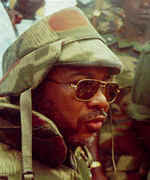
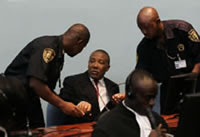 When I saw Charles Taylor last Monday (see my April 6 posting), I felt no emotions. I saw a good looking, well dressed, polite man, who sat there, before his judges. His face was familiar: I have been following the NPFL-insurrection since its start in 1989. Also the four friends I was with, knew him very well. We have lived in Liberia or Sierra Leone and we all knew what was going on. Two of my friends met Taylor on more than one occasion in Burkina Faso. His friendship with President Compaore gave him a foothold in the capital Ouagadougou, where he now and then stayed during the first period of the Liberian civil war (1989 – 97).
 2) According to a
 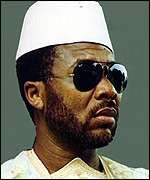 It is expected that Charles Taylor will be the first witness in his own war crimes trial this summer. Will he speak as a former warlord, as a former president or as a well dressed millionaire-businessman?


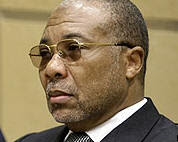 At 9:30 A.M. sharp the court session was opened. The trial against the 61-year old former leader – once


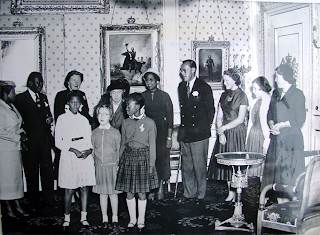 Prince Bernard would again visit Liberia in 1962 whereas Queen Juliana reciprocated with a State visit to Liberia in 1974.

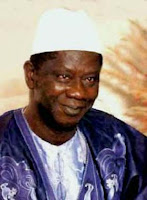 The news of his death came as no surprise. When I heard it this morning, my first reaction was: ‘Finally’.